Corneal Collagen Cross-Linking for Keratoconus
At GoldmanEye, our mission is to protect and preserve your vision using the most advanced, medically proven techniques available. For patients diagnosed with keratoconus or other forms of corneal thinning, we offer the first and only FDA-approved corneal collagen cross-linking treatment, performed with precision and care by Dr. Mark S. Milner — one of the nation’s leading corneal specialists. In addition, Dr. Helayna E. Brown, a board-certified, fellowship-trained ophthalmologist, is highly qualified to perform the procedure.
Dr. Milner was among the earliest ophthalmologists in the United States to perform cross-linking after FDA approval, helping patients across Palm Beach Gardens, Jupiter, and South Florida stabilize their vision and prevent progressive corneal damage.
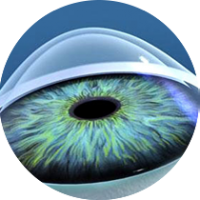

What Is Corneal Collagen Cross-Linking?
Corneal collagen cross-linking (CXL) is a minimally invasive, in-office procedure designed to strengthen and stabilize the cornea, the clear front surface of your eye.
It’s primarily used to treat keratoconus — a condition where the cornea becomes thin and cone-shaped, leading to distorted vision, light sensitivity, and frequent changes in eyeglass or contact lens prescriptions. Without treatment, keratoconus can progress to severe visual impairment and may eventually require a corneal transplant.
Cross-linking halts this progression by reinforcing the cornea’s internal structure — essentially stopping the disease in its tracks and preserving your existing vision.
How the Procedure Works
The procedure combines riboflavin (vitamin B2) eye drops with controlled ultraviolet (UV-A) light exposure.
These two components work together to create new molecular “cross-links” within the collagen fibers of your cornea, strengthening its framework and improving biomechanical stability.
Step-by-Step Overview:
- Preparation: You’ll receive numbing drops for comfort. The thin outer layer of your cornea (epithelium) may be gently removed to help the riboflavin penetrate deeper.
- Riboflavin Application: Riboflavin eye drops are applied for several minutes to saturate the corneal tissue.
- UV Light Activation: A precise UV-A light is then directed at the cornea for approximately 30 minutes.
- Cross-Link Formation: The interaction of light and riboflavin triggers a natural chemical reaction that forms new collagen bonds — increasing corneal stiffness and halting disease progression.
- Recovery: A bandage contact lens is placed for protection while the surface cells heal, typically over several days.
The entire process is performed in-office, typically taking about an hour from start to finish.

What to Expect Before, During, and After Cross-Linking
At GoldmanEye, we closely monitor your healing process with follow-up visits and corneal imaging to ensure long-term stability.
Who Is a Candidate for Corneal Cross-Linking?
You may be a good candidate for corneal cross-linking if you have been diagnosed with:
- Progressive keratoconus
- Post-LASIK ectasia (corneal weakening after refractive surgery)
- Pellucid marginal degeneration or other forms of corneal thinning
Cross-linking is especially beneficial for younger patients whose keratoconus tends to progress more rapidly. Early intervention can prevent the need for future corneal transplantation and maintain functional vision with glasses or contact lenses.

Benefits of Corneal Collagen Cross-Linking
- 1Stops progression of keratoconus or ectasia
- 2Strengthens and stabilizes the cornea
- 3Delays or prevents the need for corneal transplant
- 4Non-invasive and performed in-office
- 5FDA-approved safety and efficacy
- 6Permanent results — once cross-linked, the cornea typically remains stable for life
Cross-linking doesn’t reverse existing corneal irregularities, but it prevents further deterioration, allowing patients to maintain stable vision and better tolerate corrective lenses.
FDA-Approved Technology — The Avedro 2KXL System
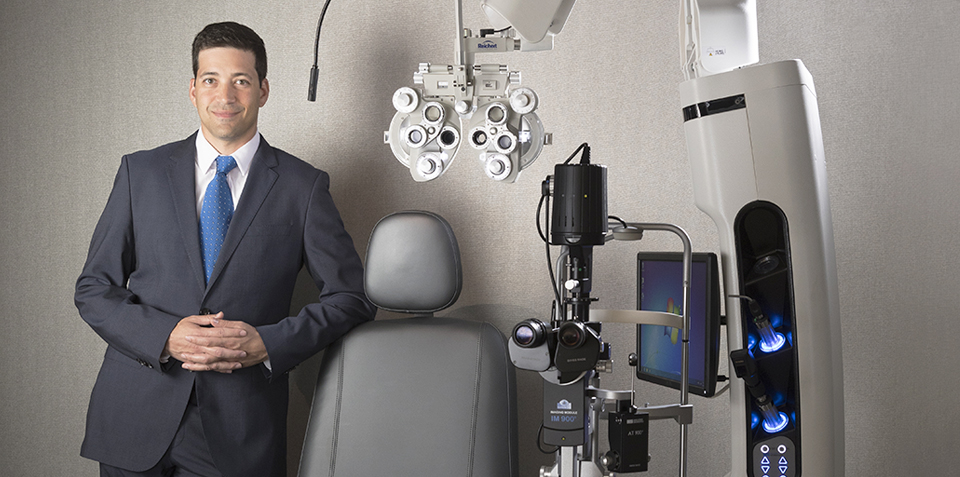
GoldmanEye proudly uses the Avedro KXL® System, the first and only FDA-approved platform for corneal cross-linking in the United States.
This advanced device ensures precise light delivery, uniform riboflavin saturation, and consistent results — all with minimal discomfort and short recovery time.
As an early adopter of this technology, Dr. Milner has extensive experience performing the procedure safely and effectively. His expertise helps patients throughout Palm Beach, Broward, Martin, and Treasure Coast counties receive trusted, world-class care close to home.
Risks and Safety Considerations
While cross-linking is generally safe, it’s still a medical procedure. Possible (but rare) side effects include:
- Temporary blurry vision
- Eye discomfort or light sensitivity during healing
- Mild corneal haze (usually temporary)
- Infection or delayed epithelial healing
GoldmanEye’s meticulous pre-screening and postoperative care reduce these risks significantly. Our team prioritizes your comfort, safety, and long-term outcomes at every step.
Insurance Coverage and Cost
The FDA-approved corneal cross-linking procedure is now covered by most major insurance providers and Medicare when performed for progressive keratoconus or post-LASIK ectasia.
Our billing team will verify your benefits in advance and provide transparent cost estimates before scheduling your treatment.
For patients without coverage, we offer payment plans and flexible financing options. Our team will help you explore every path to make this vision-saving procedure accessible and affordable.
Seeing the Difference
Want to understand how keratoconus affects vision?
We offer a Keratoconus Vision Simulator during your consultation so you can visualize the difference between untreated keratoconus and post-cross-linking stability.
Patients are often surprised at how much sharper, steadier, and more comfortable their sight can become after treatment.
Why Choose GoldmanEye for Corneal Cross-Linking
- Experience: Dr. Mark S. Milner is a national leader in corneal surgery and dry eye management, with decades of experience performing complex procedures.
- Technology: We use the Avedro 2KXL system, ensuring safety, accuracy, and proven outcomes.
- Trust: Our local Palm Beach Gardens practice is known for compassionate, individualized care.
- Results: Thousands of patients have stabilized their keratoconus progression and preserved their vision through cross-linking at GoldmanEye.