Advanced Dry Eye Management
At Goldman Eye, we understand how irritating, painful, and frustrating dry eye disease can be. Millions struggle with burning, itching, tearing, or a gritty sensation that affects work, sleep, and quality of life.
Led by internationally recognized specialist Dr. Mark S. Milner, our practice provides the latest diagnostics and evidence-based treatments for Dysfunctional Tear Syndrome (DTS) and Meibomian Gland Dysfunction (MGD) — the two most common causes of chronic dry eye.
Dr. Milner has devoted his career to studying and treating dry eye. His published treatment algorithm, used by physicians nationwide, integrates both FDA-approved and innovative off-label therapies to deliver long-term relief.
Understanding Dysfunctional Tear Syndrome (DTS)
Dry eye is not one single problem — it’s a multifactorial condition that develops when your eyes don’t produce enough tears, when tears evaporate too quickly, or when they lack the proper balance of oil, water, and mucus.
Healthy tears are essential for clear vision and comfort. When this delicate system breaks down, you may experience:
- Burning, stinging, or scratchy sensation
- Watery eyes (paradoxical tearing)
- Light sensitivity
- Blurry or fluctuating vision
- Redness or fatigue after reading or screen use
Environmental factors — dry air, wind, contact lenses, allergies, medications, or digital-device use — can make symptoms worse.
The Role of Meibomian Gland Dysfunction (MGD)
Up to 86 % of dry-eye cases are linked to Meibomian Gland Dysfunction.
The Meibomian glands, located along your eyelid margins, secrete the lipid (oil) layer of the tear film that prevents evaporation. When these glands become blocked or inflamed, the tear film breaks down, causing eyes to dry out quickly.
Common causes of MGD include:
- Reduced blinking from prolonged screen time
- Contact-lens wear
- Hormonal changes (especially post-menopause)
- Autoimmune diseases (e.g., rheumatoid arthritis, lupus)
- Certain medications such as antihistamines or beta-blockers
If left untreated, the glands can atrophy permanently, leading to worsening dryness, burning, and blurred vision.


Diagnosing Dry Eye at Goldman Eye
Our evaluation begins with advanced ocular-surface testing, including:
- Tear-film osmolarity and inflammation markers
- Meibomian gland imaging (LipiScan®)
- Blink-rate analysis and slit-lamp examination
- Ocular-surface staining to assess cell health
These tools allow us to pinpoint whether your dry eye stems from gland blockage, tear deficiency, or evaporative imbalance, and to design a treatment plan that addresses the root cause — not just the symptoms.
Advanced Treatment Options
At Goldman Eye, we combine medical therapy with the latest in-office procedures to restore healthy tear-film function and long-term comfort.
LipiFlow® Thermal Pulsation System
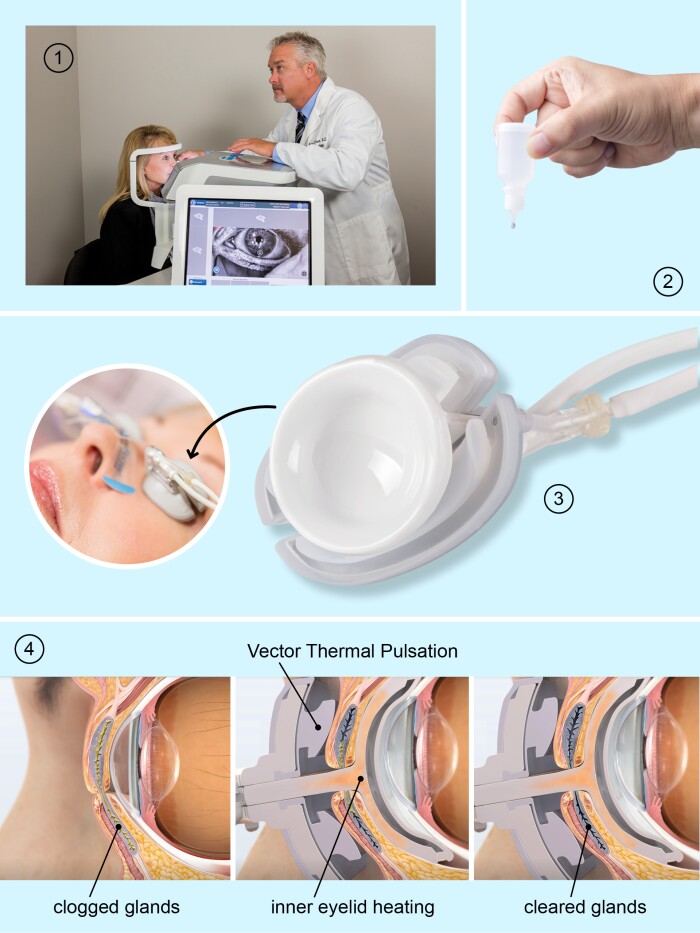
The LipiFlow® system is a breakthrough, FDA-approved technology that safely clears blocked Meibomian glands from the inside out.
How it works:
- 1Imaging & Diagnosis: Using LipiScan®, we capture detailed gland images.
- 2Preparation: Numbing drops ensure comfort.
- 3
Treatment: Sterile, dome-shaped activators are placed on each eye, protecting the cornea while gently heating the inner eyelids.
- 4
Thermal Pulsation: Controlled heat + pulsing pressure liquefy and express hardened oils, restoring normal flow.
The treatment takes about 12 minutes per eye, is completely painless, and provides months — even years — of relief for many patients.
Clinical research published in Clinical Ophthalmology found that LipiFlow® significantly increases comfortable contact-lens wear time and reduces MGD symptoms within weeks.
With phacoemulsificationcataract surgery, an ultrasoundinstrument breaks up the centerof the cloudy lens and suctionsit out.
ENVISION INMODE Lumecca Intense Pulse Light treatment (IPL)
ENVISION INMODE Lumecca Intense Pulse Light (IPL) treatment works to control the inflammatory process, stop the vicious cycle of inflammation, and reduce the need for medications. IPL delivers pulses of light to the skin, generating tissue heating to help reduce redness and inflammation. IPL treats ocular rosacea, Meibomian Gland Dysfunction (oil gland issues), and Inflammatory dry eye. It has been shown to decrease Demodex and bacteria around the eyelids. During treatment, a specialized handpiece emits flashes of light that penetrate the skin, activate the meibomian glands, and minimize those unwanted blood vessels. The powerful bursts of light also close off blood vessels that cause inflammation in ocular rosacea.
BlephEx® Eyelid Exfoliation
Dry eye and blepharitis (eyelid inflammation) often occur together. The BlephEx® device safely removes debris, biofilm, and bacteria that accumulate along the lash line — a major contributor to recurrent MGD.
In a quick, painless session, a rotating micro-sponge gently cleans the eyelid margins, unclogging gland openings and improving tear-film stability. Regular BlephEx® treatments can dramatically reduce irritation and recurrence of blocked glands.
Additional Therapies
Depending on your diagnostic profile, Dr. Milner may recommend:
- Prescription eye drops (Restasis®, Xiidra®, Cequa®) to increase tear production
- Anti-inflammatory medications to reduce swelling of the oil glands
- Nutritional supplements (Omega-3 fatty acids) for tear quality
- Punctal plugs to retain natural tears
- Intense Pulsed Light (IPL) therapy for ocular rosacea and meibomian inflammation
- Humidifier and environmental adjustments for indoor comfort
Our multi-modal approach ensures every layer of your tear film — lipid, aqueous, and mucin — is addressed.
The Importance of Blinking and Lifestyle Habits
Blinking keeps your eyes lubricated and your Meibomian glands active. When you focus on screens, your blink rate can drop by 50 percent, leading to dryness.
Simple ways to support eye health:
- Follow the 20-20-20 rule — every 20 minutes, look 20 feet away for 20 seconds.
- Stay hydrated and maintain a balanced diet rich in Omega-3s.
- Use protective eyewear in windy or dry conditions.
- Avoid smoke and limit direct air conditioning on the face.
Small changes can make a big difference when paired with professional treatment.

Why Choose Dr. Mark Milner and Goldman Eye
- National Expertise: Dr. Milner is a board-certified ophthalmologist and Associate Clinical Professor at Yale University, internationally recognized for his research and lectures on dry eye disease.
- Comprehensive Diagnostics: We employ the latest imaging and tear-film testing systems to find the root cause of your symptoms.
- Full Range of Therapies: From LipiFlow® and iLux® to BlephEx®, IPL, and topical treatments — everything you need is under one roof.
- Personalized Care: We customize each plan to your lifestyle, occupation, and environment for lasting results.
Our goal isn’t just to relieve dryness — it’s to restore the natural function of your tear system so you can see comfortably again.
Insurance Coverage and Cost
Some dry-eye treatments may be covered by insurance if medically necessary. Our team will verify your benefits and review all costs before treatment. For elective therapies such as LipiFlow® or iLux®, we offer flexible payment plans to make care accessible for every patient.